|
|
Microscope Museum Collection of antique microscopes and other
scientific instruments |
|
|
|
|
|
Microscope
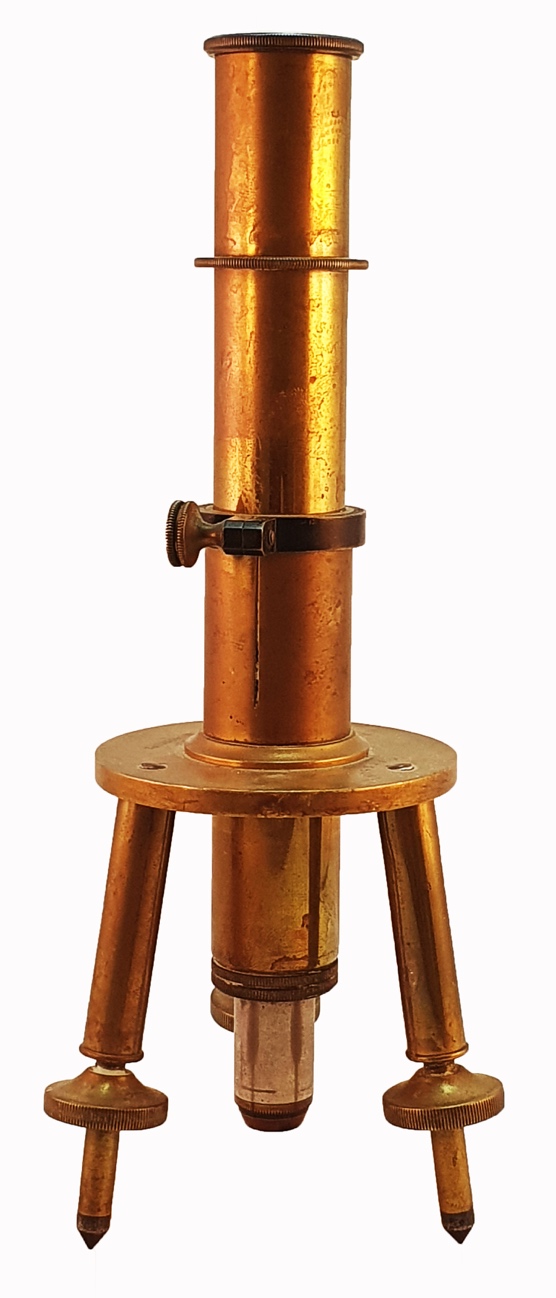
178 (J Swift
& Son; Stead workshop microscope; c. 1915)
James
Swift were microscope makers trading from London and founded in 1853
by James Powell Swift, who was son of the watchmaker Thomas Swift. Before
founding his company, James Swift was apprenticed to the well-known
microscope maker Andrew Ross. In 1881 they made improvements to microscope
design, including the replacement of the straight rack and pinion focusing to
helical cut components and a new fine focus system. In 1884, Mansell James
Swift, son of James Powell, joined the company and the name was changed to James
Swift & Son. In 1901, Captain Scott was supplied with Swift
microscopes for use on the R.R.S. Discovery for the 1901-1904 expedition,
named in the catalogue of the time as the 'Discovery' model. In 1903, Mansell
Powell John Swift, grandson of the founder, joined the company. In 1906, the
founder of the company, James Powell Swift, died. In 1912, the company was
incorporated as a limited company and the name changed to J. Swift Ltd.
In 1942, both Mansell Powell and Mansell James died. In 1946, ER Watts and
Son Ltd took over the company, mainly due to the association between the
Watts and Swift families in earlier years. In 1949, they employed John H.
Basset who, in 1968, took over the company. Stead and made by J. Swift &
Sons. The instrument is engraved with ‘J. SWIFT & SON, LONDON’ and
‘WORKSHOP MICROSCOPE’, and can be dated to c. 1915. The microscope was
designed for engineers, iron and steel founders and other workers in metals
and, as the metals examined were opaque, there was no need for any substage
apparatus. The legs of the tripod may be lengthened or shortened by rotating
the milled heads on them, in order to compensate for any unevenness of the
surface of the object under examination. The optical tube slides in a fitting
through the centre of the plate of the tripod for focussing and can be fixed
by a small clamp screw. The instrument was originally completed with a
vertical illuminator (including a reflector, lamp and battery; Figure 1),
missing from this instrument. According to the seller of this instrument, the
microscope originally belonged to an engineer who worked to the shipbuilding
company Swan Hunter, based in Wallsend, Tyne and Wear, England. This company
was responsible for some of the greatest ships of the early 20th century,
most famously the RMS Carpathia (launched in 1901, which rescued survivors
from RMS Titanic) and RMS Mauretania (launched in 1906).
Figure
1.
Workshop metallurgical microscope originally designed by JE Stead and made by
J. Swift & Sons as engraved in the company’s 1914 catalogue. References James Swift and Son (https://www.gracesguide.co.uk/James_Swift_and_Son), last accessed on
12.08.2020 COMPOUND
TRIPOD MICROSCOPE FOR INSPECTION OF METAL SURFACES (https://www.microscope-antiques.com/stead.html), last accessed on
16.04.2021 LAST
EDITED: 05.05.2021 |