|








|
      
     
|
|
American
Optical (USA)
The American Optical has its
origins in 1826 when William Beecher started a modest jewellery store in
Southbridge, Massachusetts, USA. In 1869, the company was established as
American Optical (AO) Company, mostly focussed on spectacles and
sunglasses. In 1935, the American Optical purchased the Spencer Lens
Company, located in Buffalo, New York. The company was a manufacturer of
high-quality microscopes and is considered the first American microscope
maker. In 1945, the name Spencer Lens Company was changed to American
Optical Scientific Instrument Division and, in 1950, AO relocated their
Southbridge ophthalmic instrument manufacturing to the Buffalo facility. In
1967, AO was purchased by Warner Lambert Pharmaceutical. Over the next two
decades the company changed hands several times, carrying the names:
Cambridge Instruments, Reichert-Jung, Inc., and Leica Microsystems.
Finally, in December of 2002, a management buyout in collaboration with
Summer Street Capital Partners of Buffalo, NY, occurred, and Reichert, Inc.
was formed.
|
|
|
|

|

|
|
|
|
|
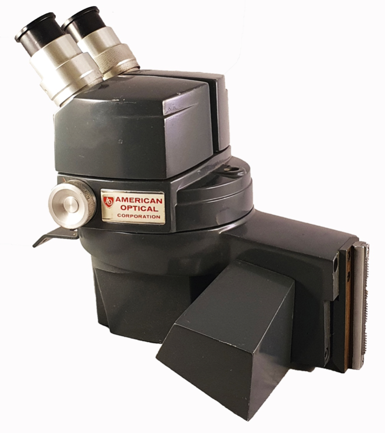
435 (American
Optical; stereoscopic microscope series 25; 1960s)*
|
377 (American
Optical; stereoscopic shop microscope; c. 1948)*
|
358 (American
Optical; Stereo Star Zoom head; 1960s – 1980s)*
|
|
|
* Instrument kindly donated by Dave Levell
(Pembrokeshire, Wales) in May 2023
|
|
|
Bausch
& Lomb (Rochester, USA)
Bausch & Lomb was founded by
two immigrants from Germany, Jacob Bausch and
Henry Lomb. Bausch was both an optician and woodworker by training. Their
company first became successful with the use of hard rubber eyeglass
frames. This eventually allowed expansion of the business into other
optical areas including microscopes. Bausch’s son Edward learned to make
microscopes, and the company prospered after it began to manufacture them.
The first patent granted to Bausch was for a very simple Linen prover type
microscope in 1865. About 1874, the firm started to produce both simple and
compound microscopes. In 1890 Edward Bausch contacted Carl Zeiss, a German
optics firm, and soon arranged for Bausch & Lomb to license Zeiss’s
patents, with the exclusive rights to the U.S. market. In 1907 Zeiss bought
20 percent of Bausch & Lomb, granting the company free use of Zeiss
patents in the United States. In 1915 Zeiss sold its 20% share back to
Bausch & Lomb, and until 1921, the two companies had no dealings with
one another (although Bausch & Lomb continued to use Zeiss patents). In
1926 Jacob Bausch died, and Edward Bausch became chairman of the board. In
1937 Bausch & Lomb went public. The Bausch & Lomb's optical systems
division was bought by Cambridge Instruments in 1987, using the name
Cambridge instruments. Cambridge Instruments merged with Wild-Leitz in 1990 to form Leica plc.
|
|
|
|
|
|
|

|
|
|
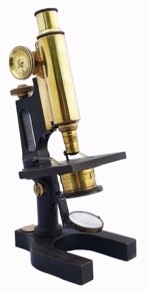
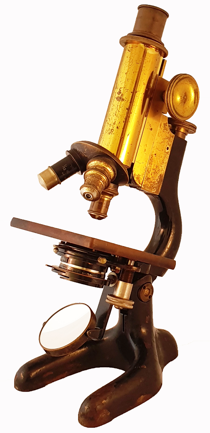
101 (Bausch and Lomb; jug
handle microscope; 1907)
|
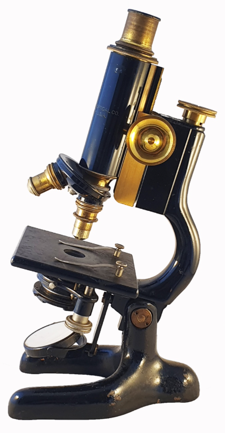
108 (Bausch and Lomb; 1911)
|
505 (Bausch
and Lomb; microscope model FF; c. 1915)
|
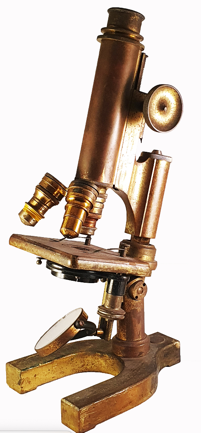
169 (Bausch
& Lomb; model HA; 1943)
|
265 (Bausch
& Lomb; continental microscope BB; c. 1900)
|
|
|
|
|
|
|
|
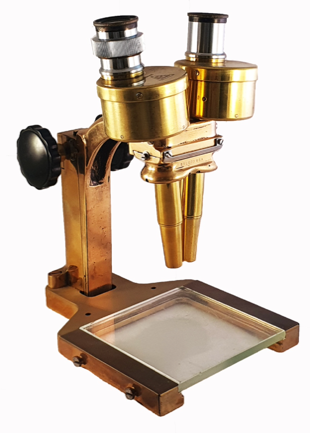
295 (Bausch
and Lomb; dissecting microscope model T; 1910s)
|
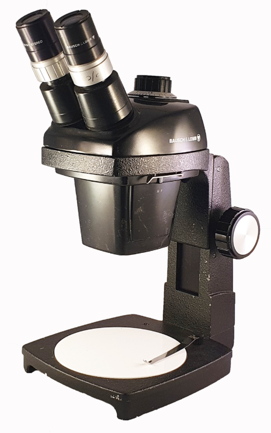
369 (Bausch
& Lomb; StereoZoom 4 microscope; 1960s)*
|
375 (Bausch
& Lomb; Stereoscopic Greenough microscope; 1930s)*
|
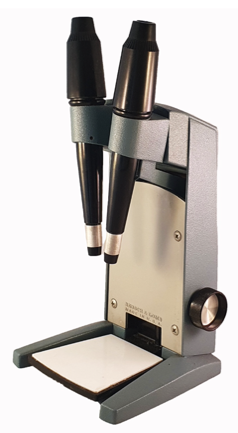
396 (Bausch
& Lomb; stereo microscope, model SSM15; 1960s)*
|
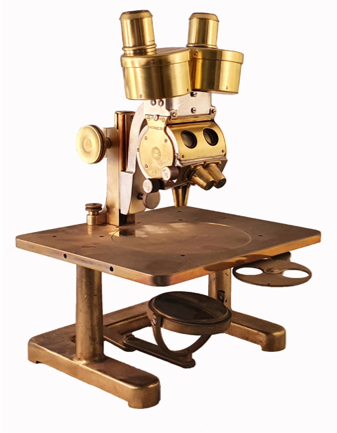
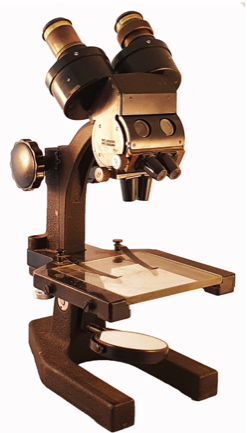
453 (Bausch
& Lomb; stereoscopic microscope with drum nosepiece; c. 1927)*
|
|
|
|
|
|
|
|
455 (Bausch
& Lomb; stereoscopic microscope, model BKT; 1943)*
|
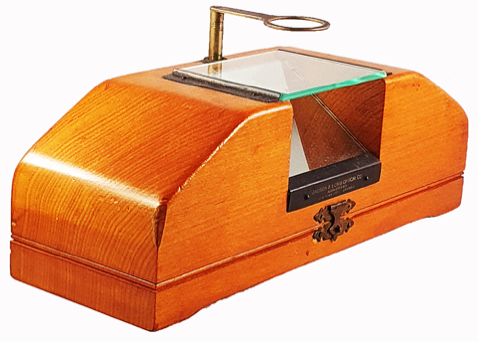
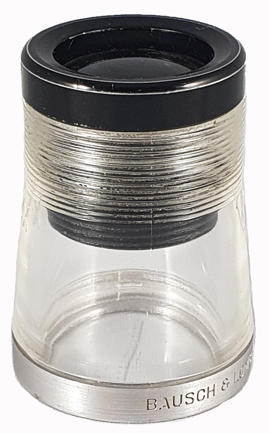
270
(Bausch and Lomb; Hastings measuring magnifier; 1990s)
|
|
|
|
* Instrument
kindly donated by Dave Levell (Pembrokeshire, Wales) in May 2023
|
|
|
|
|
|
Spencer
(Buffalo, USA)
Charles Achilles Spencer was the
first successful American maker of microscopes, publishing his first
catalogue in 1838. Later, in 1865,
he began operating as C.A. Spencer & Sons. In 1873 Spencer and his sons moved from
the original shop in Canastota, New York to Geneva, New York. After Charles
death in 1881 the business was carried on by his son Herbert, who, after a
time moved to Cleveland, Ohio, and then, in 1890, to Buffalo, New York,
where the company remained. Between 1890 and 1895 the company operated by
the name of Spencer & Smith. The Spencer Company was incorporated in
1895, using the name Spencer Lens Company up into the 1940's. American
Optical bought the Spencer Lens Company in 1935 and by 1945 it was known as
the Instrument Division of American Optical Company (hence the designation
found on many microscopes as ‘AO Spencer’). In 1982 Reichert partnered with
AO, by that time a part of the Warner-Lambert Group. The partnership used
the name Reichert-Jung. They were bought by Cambridge Instruments in 1986,
which then purchased Bausch & Lomb's optical systems division in 1987,
using the name Cambridge instruments. Cambridge Instruments merged with
Wild-Leitz in 1990 to form Leica plc.
|
|
|
|
|
|
|
|
|
|
83 (Spencer; Buffalo, USA;
1942)
|
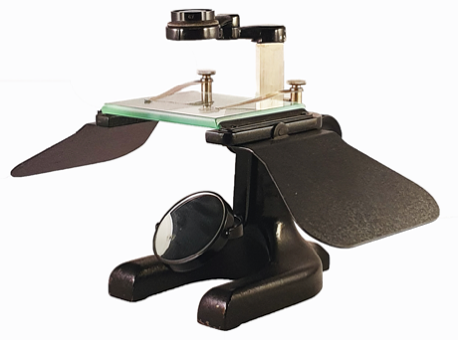
132 (Spencer,
Buffalo, USA; Dissecting microscope No. 82; 1930s)
|
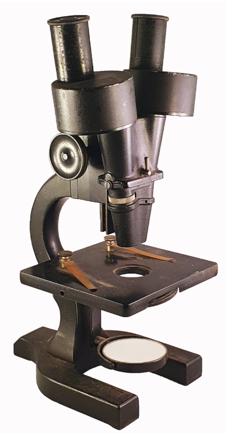
378 (Spencer;
stereoscopic microscope; c. 1920)*
|
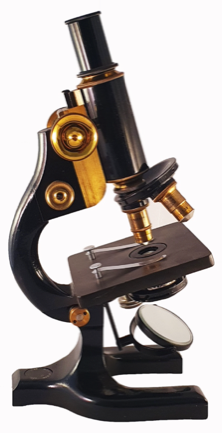
413 (Spencer;
microscope Nº. 44; c. 1919)*
|
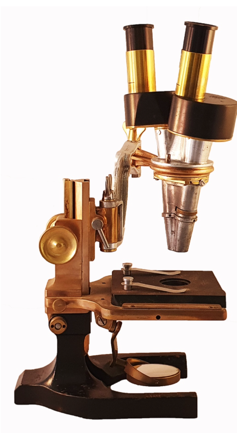
437 (Spencer;
convertible binocular microscope No. 58; 1920s)*
|
|
|
|
|
|
|
|
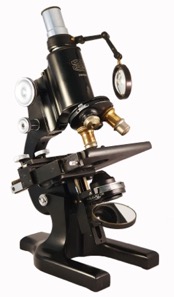
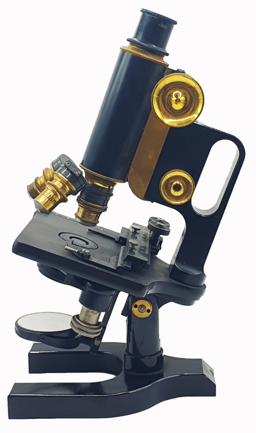
557 (Spencer;
microscope No. 20; c. 1917)
|
|
|
|
|
* Instrument
kindly donated by Dave Levell (Pembrokeshire, Wales) in May 2023
|
|
|
|
|
|
J
Zentmayer (Philadelphia, USA)
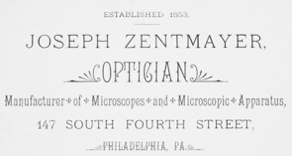
Joseph Zentmayer
(1826 – 1888) worked as an instrument maker in Germany before emigrating to
the USA in 1848. Zentmayer started his own
business in 1853 for making mathematical instruments. He made his first
microscope in about 1856 and continued producing these instruments during
the following 30 years. After Zentmayer’s death
in 1888, his sons continued to supply microscopes signed with his name
until at least 1895. The firm traded from 147 South Fourth Street,
Philadelphia, USA (1853 – 1876) and 209 South Eleventh Street, Philadelphia
(from 1876).
|
|
|
|
|
|
|
|
|
|
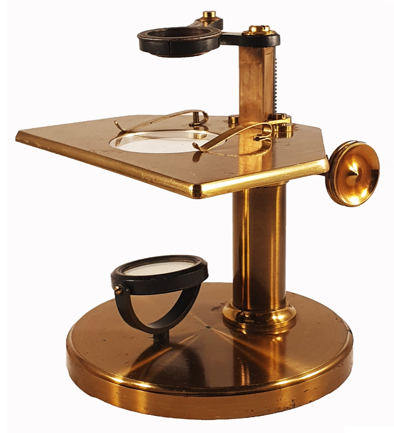
477 (J.
Zentmayer; dissecting microscope; c. 1890)
|
|
|
|
|
|
|
|
|
|

